Your cart is currently empty!
“Through the genius of evolution, the Earth has selected fungal networks as a governing force managing ecosystems.”
Paul Stamets
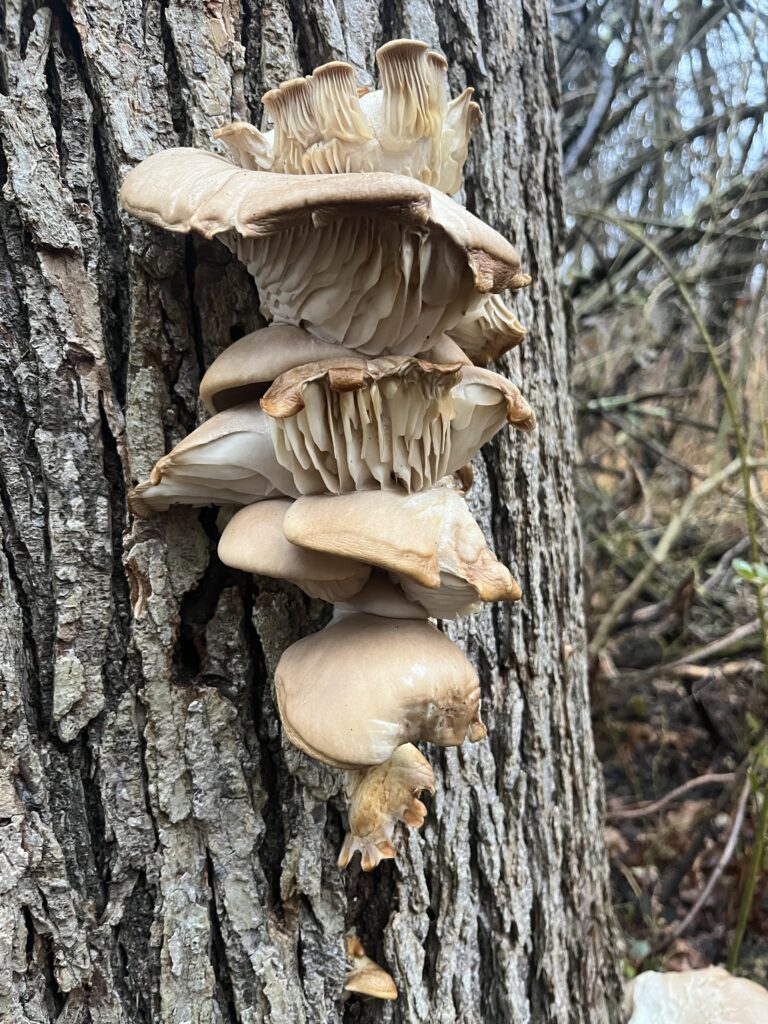
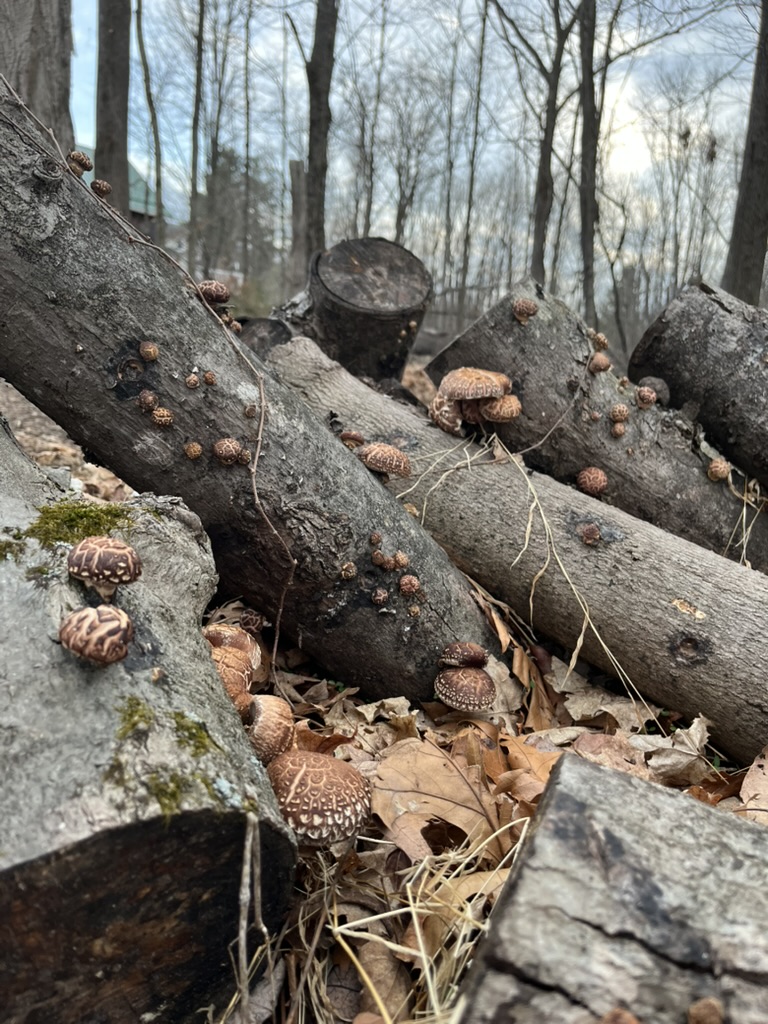
Mushrooms and mycelium can be a polarizing topic, many love them, some despise them, a few are scared of them. Whatever your reaction, mycelium is an absolutely essential family in the tree of life from the structure of the soil, the recycling of forest materials, or the yeast rising your bread and fermenting your beer.
The production of edible mushrooms is a fundamental practice here at Farm on the Fen. As an aspect of forest management, inoculating logs (or bolts) of certain tree species will do no harm to the wildlife, soil or the forest as a whole. Rather, we harvest a nutrient-dense and high value crop from a process that is naturally ongoing around us. As mycelium digests the lignin and cellulose from a bolt, flushes of edible mushrooms will bloom for about three years. When the log is exhausted, the remaining structure returns to the forest floor as soil and mulch.
Mushroom production offers us specialty crops that carry amino acids, antioxidants, protein, polysaccharides and important trace minerals. This crop also adds resilience to our farm as the production system is flood, drought, heat and cold tolerant: they’ll simply wait until a better day to bloom without ever missing a beat.
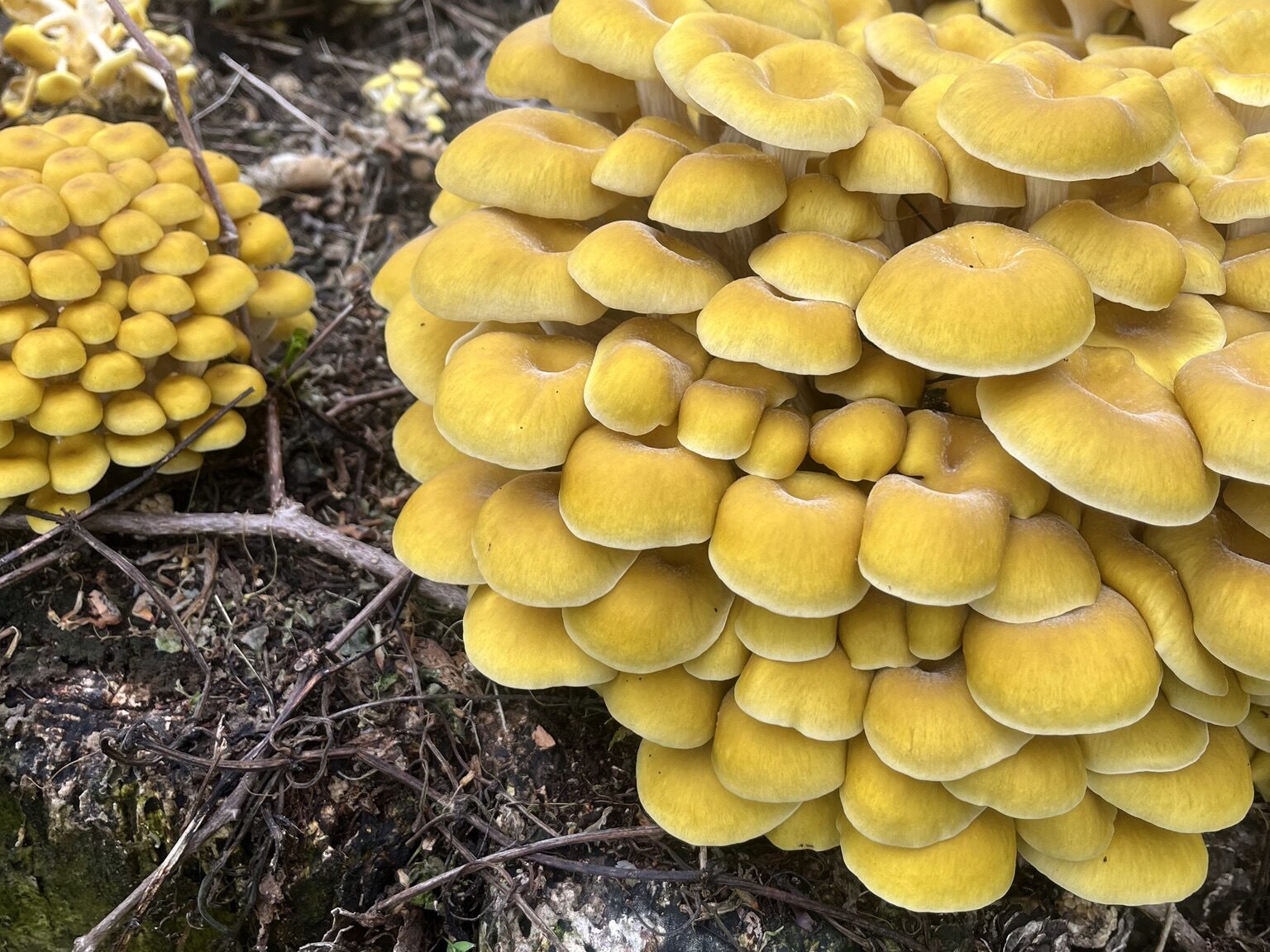
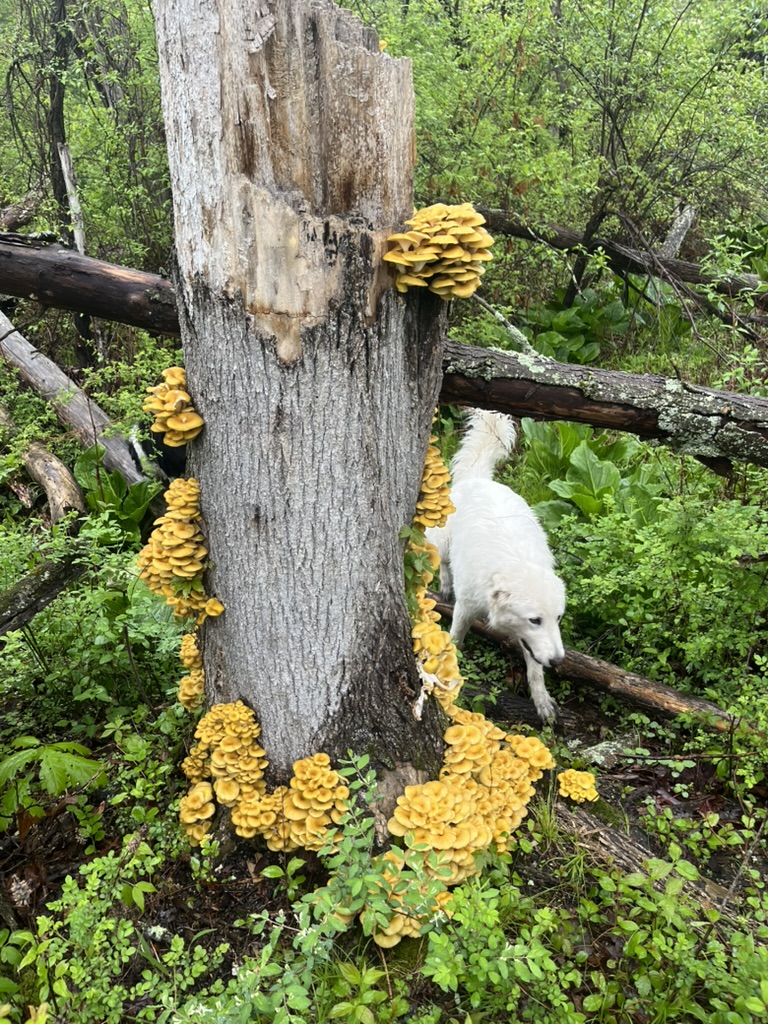
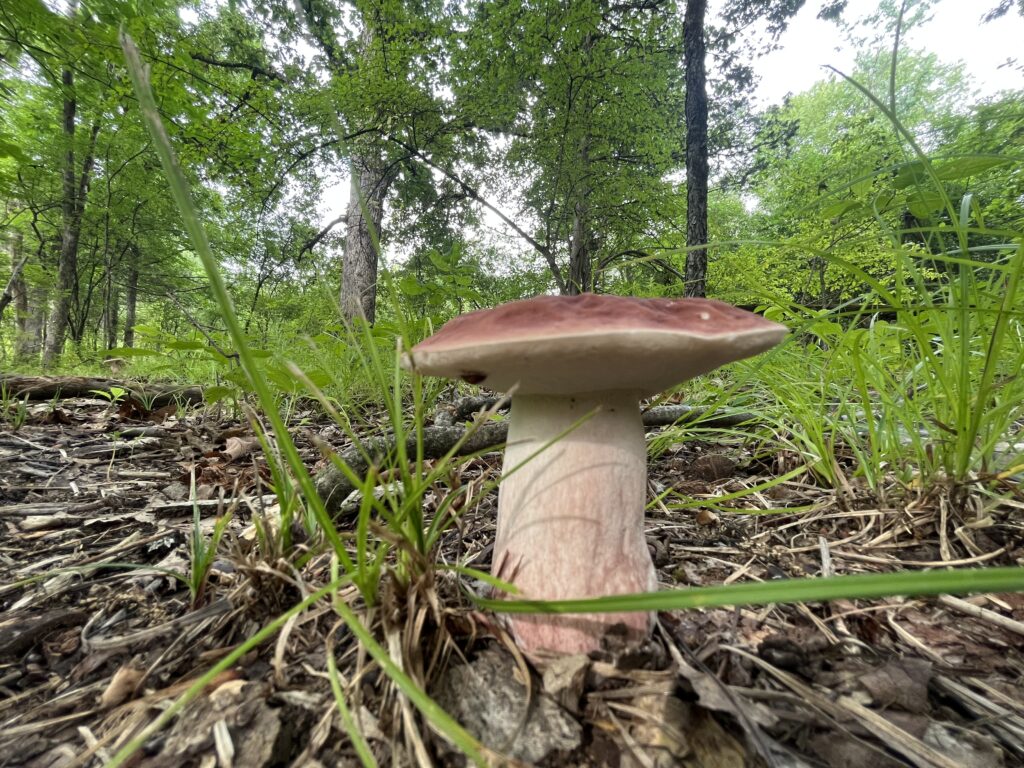
Right now we are cultivating Lion’s Mane, Oyster, Red Wine Cap and Shiitake mushroom varieties. We also forage wild Bolete, Wood Ear, Turkey Tail and Golden, Pearl and Winter Oyster mushrooms from the forest wetlands. These are primarily harvested from Maple, Black Walnut, Elm or directly from the soil.